



Embracing failure as a growth strategy in business leadership and brand growth isn’t something most entrepreneurs are taught but it’s often the exact mindset shift required to reach the next level. What if failure wasn’t a detour, but part of the plan?
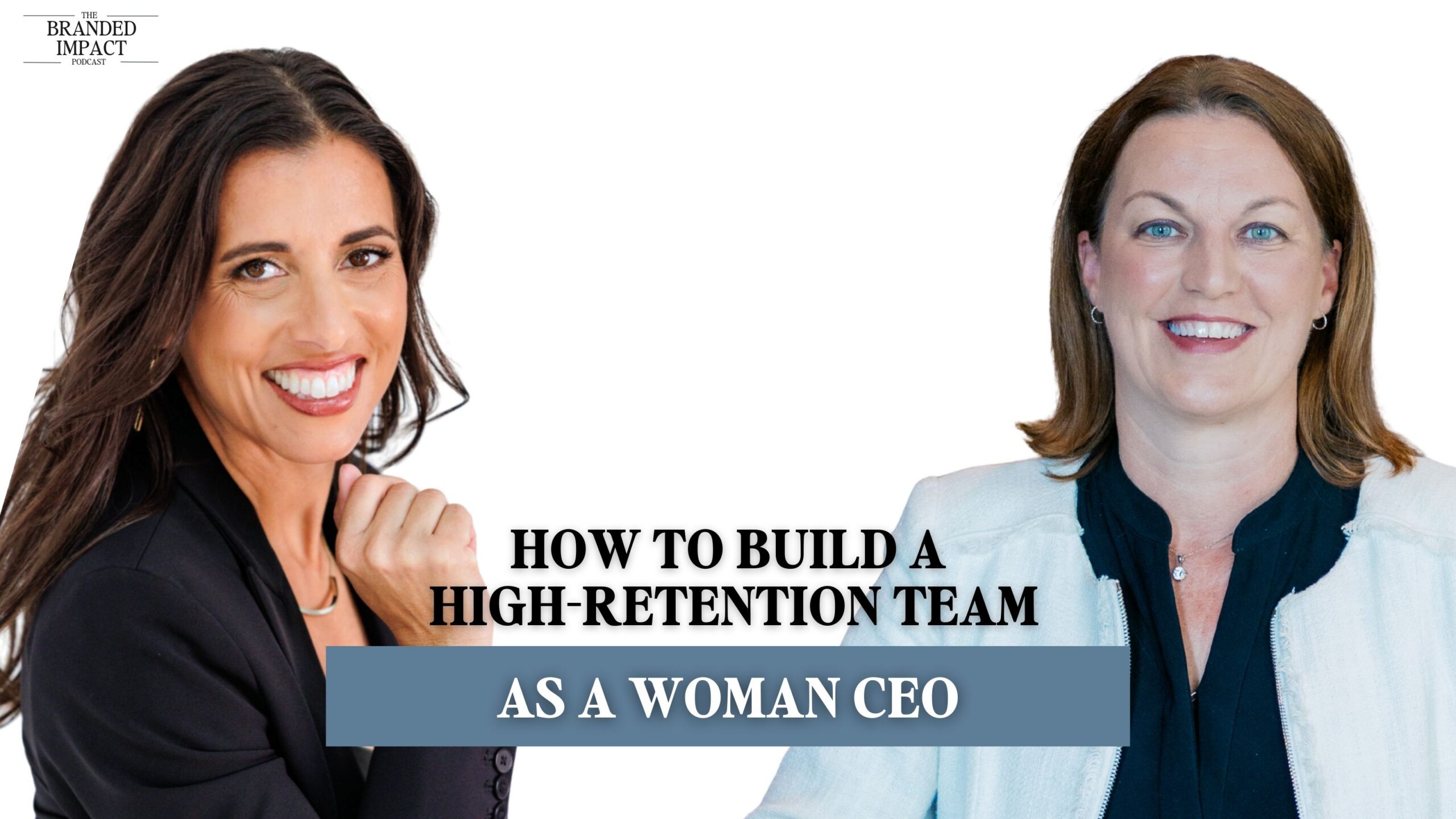
In this episode of The Branded Impact Podcast, I sat down with Jody Layne, Co-Founder & CEO of Accelerated Medical Practices, to talk about resilience, visibility, and why business growth is a compound effect, not a single moment.
Her mantra says it all: Be afraid and do it anyway.
If you are a successful woman entrepreneur who feels like you have outgrown your current brand or you are building your next level, this conversation is a reminder that you do not need perfection to lead. You need clarity, consistency, and the courage to keep moving.
🎧 Listen to the full episode of The Branded Impact Podcast on Apple, Spotify, YouTube or find your favorite podcast platform.
The real truth about growth: It is a compound effect
One of the biggest mindset shifts from this episode is simple:
Business growth is built through repeated actions over time, not one breakthrough move.
That matters because so many women are trying to “get it right” before they put themselves out there. They wait until the website is perfect, hoping clarity will magically appear.
They hold back until their content feels polished enough to share.
And somewhere along the way, they convince themselves confidence has to come first.
But confidence usually comes after movement, not before it.
Takeaway: If you want momentum, your job is not to avoid failure. Your job is to keep building through it.
How Jody scaled one clinic from $500K to $4.2M (and what that teaches you)
Before founding Accelerated Medical Practices, Jody joined a hormone clinic as COO and helped grow it from $500,000 to $4.2 million over seven and a half years.
Not by chasing trends. Not by throwing money into marketing first.
By strengthening what most businesses skip.
That experience became the foundation for AMP, where they support hormone clinics with a framework that ensures growth is sustainable, not chaotic.
Even if you are not in healthcare, the principle applies to every service-based business:
If your growth is outpacing your foundation, you will feel the disconnect.
And if your brand is not aligned with your level, it becomes harder to convert, harder to retain, and harder to scale.
The POWER Framework (and why order matters)
Jody’s company built a framework called POWER, which stands for:
- Positioning
- Operations
- Workforce
- Experience (Patient experience in their world, client experience in ours)
- Revenue
Here is what matters most: it is not just the pillars, it is the order.
Many business owners start with marketing because they need leads fast, or because it feels like the quickest path to revenue.
But if operations, experience, and team are not ready to support those leads, you end up with:
- inquiries you cannot convert
- clients you cannot retain
- demand you cannot deliver on
- a constant cycle of fixing what is breaking
Sound familiar?
Brand note: This is the same reason “branding” cannot stop at visuals. Your visuals, messaging, website, and client experience must match, or your audience will feel the disconnect even if they cannot explain it.
Giving away your knowledge builds authority (and it is how you stand out in 2026)
Jody said something I love and fully agree with:
It is okay to give your knowledge away.
When you teach what you know, people start to see you as the authority. When you hold back, you stay invisible.
This matters even more right now because AI is everywhere. But AI cannot replace your lived experience, your stories, and the way you lead.
Your edge is your perspective.
If you want more visibility and credibility, do not wait until you feel “ready.” Start sharing what you know, and end it with a clear call to action so people know how to take the next step with you.
Choose your visibility path based on what you enjoy (and where your clients actually are)
A practical (and refreshing) reminder from this episode:
Do not start with everything.
Pick the visibility channel you can do consistently, and make sure it fits your audience.
- If you love speaking, start there
- If you enjoy social media, start there
- If you love conversation, podcasting may fit
- If your clients are not on TikTok, stop forcing TikTok
Consistency beats intensity, every time.
If you have not posted at all, posting seven days a week is not a strategy. It is a fast track to burnout.
Start with what you can sustain. Build from there.
The question most entrepreneurs skip: What outcome are you actually trying to create?
This was one of the biggest “pause and reflect” moments.
If your goal is brand awareness, your strategy will look different than if your goal is five new clients per month for the next quarter.
So many women are told:
- post 4x a week
- start a blog
- build a website
- do more video
Those are not bad tactics. But without a clear outcome, you can spend months doing the “right things” and still feel like nothing is working.Before you choose tactics, define the result.
Then build a plan that matches it.
Selling is serving (and the CTA is not optional)
I shared something real in this episode: I have absolutely been guilty of giving value and forgetting the call to action.
If you teach, speak, post, or host workshops without telling people what to do next, you are leaving impact on the table.
Jody reframed selling in a way every founder needs to hear:
If you help people, you are in sales.
You are not a pushy salesperson.
You are a leader offering a solution.
When you shift from “I do not want to sell” to “I am here to serve,” the CTA becomes a natural extension of your value.
And also, a “no” is not always rejection. Sometimes it is simply not the right time.
Why email marketing still matters (especially when social platforms are unstable)
Email came up for a reason.
Social accounts can get hacked, restricted, or disappear overnight. Email is one of the only channels you actually own.
Jody shared their cadence at Accelerated Medical Practices:
- Every Monday
- Every other Thursday
- Plus a sales push during the last week of the month
- Plus event promos as needed
So yes, it can be 1–4 emails per week.
If you are worried about unsubscribes, here is the truth:
- Some people unsubscribe because they are cleaning their inbox
- Some people stay subscribed even if they do not open every email
- And if someone unsubscribes, they were not your person anyway
The bigger takeaway: subject lines matter more than most people think.
Treat your subject line like your hook. It is what stops the scroll inside the inbox.
What this means for your brand (if you are ready for your next level)
If you are in a season where your business is growing but your brand still feels a step behind you, this is your sign to stop trying to “fix it later.”
Your brand shows where you are today.
Your message proves your authority.
And your visuals and presence? They should help you convert, immediately.
Because when your brand is aligned, marketing works better, sales feel cleaner, and growth becomes sustainable.
Ready to build a brand that matches your level?
If this episode had you thinking, “I know I am capable of more, but my brand is not fully reflecting it,” then you might be ready for The Branded Impact Intensive.
This is where we align:
- your positioning and message
- your visual presence (so you look like the CEO you are)
- your website and brand experience (so it converts with clarity)
- your next-step strategy (so visibility turns into momentum)
Connect with Jo to discuss your vision and whether it’s time for an intensive.
Guest Feature: Jody Layne
How her name and title should appear:
Jody Layne, Co-Founder & CEO of Accelerated Medical Practices
Jody Layne isn’t just a CEO, she’s a strategist, cheerleader, and straight-talker who knows how to turn a hormone clinic from “just getting by” to predictably profitable. With decades of business and marketing experience and having performed nearly every role inside a clinic herself, she brings both strategy and heart to every client she works with. Known for her mix of transparency, drive, and genuine care, Jody makes big goals feel doable and delivers results with encouragement every step of the way.
Connect with Jody:
- Website: https://acceleratedmedicalpractices.com/
- LinkedIn: https://www.linkedin.com/in/jodybethlayne/
- Instagram: https://www.instagram.com/acceleratedmedicalpractices
- Facebook: https://www.facebook.com/acceleratedmedicalpractices
- YouTube: https://www.youtube.com/@AcceleratedMedicalPractices
Free Resource:
Access the Accelerator for FREE: https://accelerator.acceleratedmedicalpractices.com/
Episode Takeaways (Quick Recap)
If you only remember a few things, let it be these:
- Failure is not a detour. It is part of the plan.
- Growth is a compound effect, not a single moment.
- Give away your knowledge to build authority and trust.
- Choose visibility strategies you can sustain consistently.
- Define the outcome first, then build the marketing plan.
- Selling is serving, and your call to action matters.
- Email is still one of the strongest long-term channels.
Full Transcript
00:00 Using Failure to Grow a Business
02:31 The Journey of Building Accelerated Medical Practices
04:37 The POWER Framework for Business Success
07:43 Building a Brand and Establishing Authority
11:17 The Importance of Sharing Knowledge
14:47 Finding Your Unique Path to Visibility
18:52 Understanding the Disconnect in Business Strategies
20:52 Defining Clear Outcomes for Business Success
22:51 Shifting Mindsets: Selling as Serving
25:00 The Power of Persistence in Sales
27:26 Email Marketing: A Timeless Strategy
31:28 Crafting Compelling Subject Lines for Engagement
32:43 JO OUTRO_v2.mp4
Jo Espejo (00:18)
What if failure was part of the plan? This week, I’m joined by Jodi Lane, co-founder and CEO of Accelerated Medical Practices, whose proof that business growth is a compound effect, not a single moment. Her mantra, be afraid and do it anyway. We’re talking real talk, resilience, and building a brand rooted in authenticity, not perfection. Jodi, thank you so much for joining me today.
Can you start by sharing why you started Accelerated Metal Pro Practices and why you do what you do?
Jody Layne (00:46)
Absolutely. Thank you for having me. This is a real joy. I’ve been listening to your podcast for a while now. I’ve been a marketer my whole career and owned several different marketing agencies. And in 2015, I picked up a client who was a hormone doctor and did his marketing for two years and fell in love with it.
2017, he actually shared with me what he wanted to do, how he wanted to grow his practice. And I just blurted out, hire me, I’ll do that for you. So I joined him as the COO for that clinic here in Orlando and sold my agency to my partner.
I just wanted to focus on the one brand And seven and a half years later, we grew that clinic from $500,000 to 4.2 million. And there was some very specific things that I did along the way that I believe helped that growth occur. And I started to realize that the impact that
these clinics are having on the world is that more people are able to access bioidentical hormones, get healthier, live longer, full of vitality. And yet there are doctor and nurse practitioner, so many of them out there that start these clinics, I have no idea how to build their business. So I was like, well, if I can help them build their businesses, I can impact way more people.
to have great lives than I can if I stay in this one clinic. And this clinic is doing great. Like he’s doing fine. He doesn’t need me around any longer. We set everything up. So I left and started this business so that more and more people could have this amazing, healthy life.
Jo Espejo (02:18)
So impact, it really just sounds like so much of what’s driving you is impact
Jody Layne (02:23)
So if I were to help 1000 people, 1000 businesses in some way, or form, and they all helped 1000 people, like that’s a lot of people. Yeah.
Jo Espejo (02:31)
Exponential growth.
Jody Layne (02:42)
So the AMP started just working with hormone clinics. So we made that decision very early on that that is the industry that we are the most comfortable in, that we can almost guarantee success because it’s one thing to be a business coach and know business and then help different industries. But when you are able to coach a business person in an industry that you’ve worked in yourself,
you can visualize all of the operations, all the staff, like you know exactly what they need to do. We created this framework called POWER. And POWER stands for Positioning Operations Workforce Patient Experience and Revenue. And the reason we created that framework is because
The thing I did, the things I did at that other clinic all fell into one of those pillars. Everybody does at some point come up with their pricing and figure out what their goals are. And everybody does figure out their operations and they know kind of culture to build and they want to have good customer experiences. But most people want to start marketing. And it’s because they’re scared or they need money or whatever reason they start with the marketing.
And what I recognize is that if you start there, there’s a very good chance you’re going to lose a lot of time and money because of all the other four pillars aren’t nailed down and operating properly. Then if you start to invest a lot of money in marketing, then all these other areas could make those patients eventually leave you. And so it’s not just that these pillars exist, it’s that you do them in the particular order.
we really do teach the principles of power in order so that they are doing things the right
Jo Espejo (04:17)
and it’s true. you have to have awareness and clients coming in to sometimes even be able to get some of the systems worked through properly. then you have to have revenue coming in to support the business. But then when you don’t have the systems in place to support the clients, you lose them. And then can you even sustain it or can you sustain employees? And then how many… I’ve seen so many things right now between… I’ve scaled…
but now I can’t even keep up with the demand or I have a lot of inquiries coming in, but then I can’t convert them or I get them and then I lose them. And so it’s just like this constant piece. Because I think there’s also definitions of and understandings of, and it happens a lot too with branding. I’m talking about the holistic experience, not just logos and colors. And do you have a website?
you does that flow through to your client experience? How does that flow all the way through to the end? But then, you know, I didn’t realize for a long time when I said branding, what people were understanding versus the other. when you decided you wanted to go on your own, what were some of the first things that you did to even let people know that AMP existed?
Jody Layne (05:13)
Well, the good news was I have a pretty good standing in the community. while I was working at this clinic, I realized this actually back in 2020. So I knew that there were providers that needed help and I was able to speak at different conferences and I met a lot of different providers. And so I started to kind of like a side hustle.
I called it something different, but basically doing a very similar thing where I coached and consulted with different providers and helping them grow their business. So I already had a decent list of providers out there. I’d already been engaged in a number of different organizations. So that was a help.
but I just started doing the things that most businesses do. So those providers that didn’t know who I was,
understood that if they went to go work with XYZ consulting firm, that their friend of a friend recommended, that we at least were slightly different because of the fact that we have all this experience in the industry. So I just started making partnerships, started talking, and kind of walked into it with a very realistic expectation that we wanted to grow slowly.
So, you know, I’m pretty good at selling and getting clients. The problem is when you start out and you start getting a bunch of clients, guess what you don’t do? You don’t work on your own business. And then you find yourself in a situation where you are not selling the most optimal services or you’re not marketing yourself. So we spent the first six months really just working on ourselves.
We had enough clients that we could pay the bills, keep the lights on. So there’s three of us. My husband’s one of them. So we went all in financially But we spent the first six months really identifying what we wanted to build and decided this first year would be a building phase and make sure that we were doing things the right way. We developed our own website and it’s gorgeous. Like we didn’t just throw something together to get something out there. We’ve been working really hard in our socials.
Jo Espejo (06:56)
Hmm.
Jody Layne (07:20)
starting to post every single day. We did a lot of video content. We really wanted people to know we knew what talking
Jo Espejo (07:27)
So taking the time, and I think that’s the scary part, right? And it’s hard. It’s hard to be consistent. And then this is where we get caught up in, and I see it happen time and time again, and I’m guilty of it myself. I get caught up in making sure that my clients are getting everything that they need to show up in their business. And then my stuff starts to fall by the wayside. So if someone’s listening right now and they are in the verge of switching from something, because this is something common I hear, right? A lot of times we move into something that we have experience in.
Jody Layne (07:43)
Exactly.
Jo Espejo (07:54)
whether it be in a corporate position or something that we were doing before, and now we want to go out on our own. How can they identify? Because you said it’s like, I took the network I already built. Well, building that network actually took some time. So I want to take a step back into that pre-AMP world where you were working for this provider one-on-one. You just asked. Like you actually said, hey, hire me. I would love to work with you on that.
Jody Layne (08:14)
Haha.
Jo Espejo (08:15)
Because I think that sometimes we’re afraid to do that. So one that you even had the courage to be like, Hey, that’s me. I’m your gal. And then when you were in this phase and you were building this business,
Jody Layne (08:21)
Mm-hmm. Yeah.
Jo Espejo (08:27)
Was part of your job speaking or were you being intentional about getting out and speaking in these conferences and building these partnerships?
Jody Layne (08:33)
So it actually wasn’t a lot of intention in the beginning. I didn’t really think about starting this business. I’ve done a lot in my life and I really wanted to focus on this clinic.
corporation. I’ll tell you the funny thing. This is a funny story. There’s an organization called WorldLink Medical. It is the number one hormone training program in the world. Okay. They train providers in the best way to become very effective hormone clinicians. And they had a business course and I went and I spent the entire time doing this, raising my hand.
that wasn’t intentional, just the speakers weren’t very good. And so I would raise my hand to ask questions to kind of point out that the things they were saying just really weren’t very good. And the creator came up to me at the end and she said, by any chance, do you want to speak next year? Because clearly you have a lot to say. And I went, sure.
And so that was an organic, just natural thing that occurred. Then the following year, so that was in 2019, 2020, she had me speak on marketing and culture, but do you remember what happened in 2020? It was COVID, right? It was COVID. So she had the event anyway. There were like 20 people in the audience. Half of them were my own staff and then everybody else on Zoom. And I think my presentation was like at nine o’clock in the
Jo Espejo (09:38)
I’ll shut down.
Jody Layne (09:52)
on a Sunday about marketing. So I did the best I could, but I didn’t expect much. But when I got off the stage and I sat down, because it was all on Zoom, anyone who wanted to ask a question, put it in a chat and they had the speaker respond to them. I had like a hundred questions.
Jo Espejo (10:08)
Wow.
Jody Layne (10:09)
People were listening, they were interested, and I got a lot of requests. So it really, this particular company really was a very organic thing where people were asking. And then, so I started thinking
about getting out there. And the real lesson that I want to share with people is it’s okay to give your knowledge away. Because when you begin to give your knowledge away on social media, in seminars, in whatever it is, people start to look to you as the authority. When you hold back, when you’re greedy and you say, I’m not gonna tell you that because you’re gonna go do it on your own, then
no one really gets to know you. I give away what I know. I believe that is the number one way to be authentic, share what you know, and that’s people just start to gravitate towards you.
Jo Espejo (10:53)
Is that the best use of my time? Because I’m also trying to build a business and I’m also trying to do all these things. I’m going back to the person that gave me all the knowledge and all the things, because I was like, hey, I need more of that. And I really just want you to do it for me. Can you do that? But don’t be afraid. And that’s something that I truly believe in. If you’re willing to give the information, you establish yourself as that authority figure and that credibility figure. then You have to be willing to let people know that you’re available.
Jody Layne (11:17)
Mm-hmm.
And end whatever you’re teaching with that call to action to let them know, like, go ahead and give this a shot, you know, or come and work with my team. I tell these providers, like, I’ve learned all the, I’ve made all the mistakes. I’ve made all the failures. So if you work with us, we will eliminate the trial and error.
you’ll probably save 18 months of ramp up time and we can get you going right away. And that is the biggest difference. Even if you take my information and go try to implement it yourself, you’re still doing trial and error. But I do want to mention one other thing about giving your information away that is so important in this day and age is that when you share your knowledge based on experience, like you can tell it through a story, that differentiates you from AI.
But when I share it, I can share it from an actual experience of what I’ve done and ChatGPT can’t do that. So that’s another reason to kind of give it away.
Jo Espejo (12:34)
I think we get caught up in this whole like ChatGpt then lately I’ve been asking, it’s ChatGpt is so prevalent. It’s in everything that we do nowadays, right? It comes up in so many conversations. But then at the same time, I said, there’s so many more factors that can go into that. Right? And so then
Jody Layne (12:56)
Yeah. And she didn’t
tell Chat GPT, so she didn’t take it to consideration. Yeah.
Jo Espejo (13:01)
Correct. And then it’s the pivoting and then it’s
the best laid intentions. And if you follow things to a T, and I don’t know about you, but how many times have you felt like you followed all the rules? I did all the things I was supposed to do variables and there’s things that you have to do to pivot. And so what you’re saying is I’ve done it. And then now I can see when we need a pivot because of X, Y, Z factor.
Jody Layne (13:13)
Yeah.
Jo Espejo (13:24)
But the key is when you’re getting yourself out there, you’re letting people know that you exist, that you have this knowledge and you’re encouraging them to do it themselves and then reminding them that if they want assistance or what you try it you don’t love it or hey, you may just be one of those people that doesn’t want to do it by yourself. We are the option. And that’s where I think is missing from so many people. We’ve gotten into this world where I think people have really honed in and they hear this message, right? Share your knowledge, share your value.
Jody Layne (13:39)
Right.
Jo Espejo (13:49)
establish yourself as a thought leader or establish your credibility. I’m like, great, but don’t forget to tell people who you are and that you’re here to serve. Don’t just tell them to go find or that you need this and then forget to say that you’re the solution when they want go get that help. So that’s a key.
And I know for me, I have the podcast now. This was not something that I did in the very beginning. So I got out there in different phases and I started with my visibility and credibility more in a manner of, well, I mean, even networking can be overwhelming, but if you were to say trajectory wise, what do you would recommend as far as like start here and then you build to this and then you build on to adding this because to be quite honest, if you haven’t been doing anything,
And then you try to take on posting videos on social media, showing up consistently, doing a podcast, speaking on stages, doing all that stuff. That falls in the line in the same thing that we were talking about as far as efficiency goes. If you can’t be efficient in what you’re doing, then it’s to really work. Did you have any recommendations as far as like where someone should start?
Jody Layne (14:44)
Yeah, absolutely not.
Yeah, I 100 % agree with you. I would not recommend starting with everything. And everything I rattled off my tongue has been going on for a year. I didn’t do everything on day one. So I’m glad you brought that point up. I think I would recommend somebody to start with the thing they enjoy. Like if you’re a social media person, like if you spend a lot of time on social media for yourself, then absolutely start there.
I like to speak. I like to present. So it was just a natural organic thing for me to reach out to organizations and say, can I speak for you? And the podcast, I love this right here. This is my love language. I can’t tell you whether my podcast is going to propel the business. It propels me.
And so that’s why I decided to do it. It’s a lot of work though, which is why I think that if you’re going to start a new business and you wanna start getting visibility, you’ve gotta pick the thing that you would do even if you weren’t getting paid for it or you didn’t do it for your business, because that means you’re going to do it as often as possible. And I can’t really say exactly what that thing is, because every industry is different. Your target audience are different places. For example, I’m not spending a lot of time on TikTok,
My doctors are not there, you know? And I try to do things that mimic what I’m gonna tell them to do. So that’s like kind of my philosophy is would a doctor ever, you know, like go and, you know, speak on stage? Absolutely. Would a doctor, you know, do a webinar? Absolutely. So I’m doing things that are comfortable for my audience to participate in as well.
Jo Espejo (16:17)
being in places that they will be because this is where, you know, I have some clients who love being on TikTok. And then I’m going, you’re spending all of this time and effort to create TikToks, but is your ideal client even going to be here to see it? Like when you talk about social media, those tend to be the first things that people mention, but Facebook is still huge. And then there’s YouTube that so many people are just overlooking and just
ignoring and I’m like, guys, that is still like such a robust platform. But ultimately, if you’re listening and it adds into the shoulds, it’s like, all right, great, Joe. Thanks, Jodie. You’re telling me that I need to go do all of these things. Know what we’re saying is go and be intentional with your time and start with the things that you enjoy because I can tell you social media and making videos was not something that I enjoyed. And I would find any excuse in the book to move my content creation blocks on my schedule. I was like, you want me to do videos? You know, no.
Jody Layne (17:02)
Thank
Jo Espejo (17:05)
that the laundry is like my kid needs a soccer uniform tomorrow or like I would schedule anything over it. Any opportunity I had to get out of my content video creating block But then I also networking. I love in person. I do really well face to face.
Jody Layne (17:09)
Right.
Jo Espejo (17:19)
That’s where I thrive. But I also then had to make sure that I manage my time because I went through a season where I was like, wow, I just networked myself to death. Like I literally spent so many hours in person that I didn’t have time to do the other things. figuring out what brings you joy, as Jodi mentioned, because then you’re going to be more apt to do it. I like to say to you, whatever you can do consistently. So like if you haven’t been posting on social media, period, trying to take on posting seven days a week.
Jody Layne (17:27)
Yes.
Yeah, that’s true.
Mm-hmm.
Mm-hmm.
Jo Espejo (17:45)
is unrealistic to me. And I think you mentioned earlier, I think we weren’t on recording yet, but you’re like, are now getting to the point that we are staying on a consistent basis You have to start with something that you can do consistent. So if you haven’t posted at all, then maybe you start with one or two days a week and then you build to three and then you have to decide if you need to build from there.
Because I think it depends. It’s like you said, I can’t give you a blanket answer because I don’t know your industry. I don’t know your target audience. I don’t know that. So without that, I can’t tell you what your cadence should be, what your pillars should be, and honestly what platform you should be on. Because I know that there are some people who I’m like, LinkedIn is really where you need to be.
And then can you be consistent? I think ultimately consistency and authenticity are going to be the things that really can impact what you can do. If you’re in a service industry or you’re providing something that you’re going to encourage people to do, you mimicking that. so I use that and I’m related to the fact that I encourage my clients to become the face of their brand. I think it is…
so important for people to get to know who behind the business. If I never did a brand photo session myself and I never got on and showed people, well then you got to walk the talk guys. So if you’re going to encourage people and ask people to show up authentically or you have to walk the talk because then it’s almost like
Jody Layne (18:45)
Mm-hmm.
Absolutely.
Jo Espejo (19:00)
People may not understand why there’s a disconnect, but there’s a disconnect between what you’re asking them to do and what you’re doing.
Jody Layne (19:05)
There’s one more I want to throw in there, and that is being clear about the result you’re looking for. if you are starting a brand new business and brand awareness or visibility is what’s important, there’s a certain path to go down for that. Like being on social media, doing more video, being that authentic, giving away your knowledge. If you need business, if you have to start generating revenue really fast,
spending all your time on social media is not going to generate that revenue. think through, because I’ve seen this happen before where even in my own space, like providers talk to their friends and their friends own businesses, what should I do? And everybody wants to give an answer, but no one’s asking questions. So go do X, Y, Z. You need to post on social media at least four times a week. You need to be doing blogs and you need a great website.
Those three things are absolutely great marketing tactics, but if what you need are five new clients each month for the next quarter, those three things aren’t getting that for you. So I would pivot then and say, what you need to be doing is calling, networking in person where you can meet people and…
create a call to action and your website needs SEO. You need to be focused on the backend of your website. Like those kinds of things. So I say that because I’ve just seen so many disappointed providers or business owners who spend money, spend time doing what they were told to do, but they weren’t clear about what they wanted out of it and therefore didn’t get,
Jo Espejo (20:29)
That is a game changer If you guys don’t take anything else from this video or this podcast today, understand what your outcome that you’re trying to get. everything comes in phases and you get to build and evolve. And so where you started a year ago or two years ago or however long you’ve been in business doesn’t mean that that’s going to be today. And so we talk about ideal scenarios and I do talk about
all the things, but then I’m like, I usually, I usually respond with when I hear things like, I know I need to. My question is, do you? And they go, what do you mean? I’m like, well, do you, what’s your goal? Like, what are you trying to get out of this? And then where, what are you going to do with it? Because the social media piece or emailing or getting up on stages, I am guilty of getting up on stages and forgetting to tell them that I provide a service and to call me. Right? Like I’m like, here’s all the amazing things.
Jody Layne (21:17)
Hahaha.
Jo Espejo (21:19)
And then I can’t tell you how many times I haven’t given a call to action. I was just talking about it this weekend. I did a workshop, loved it, loved pouring into people. People walked out of my workshop with like, Joe, that was phenomenal. Like I am implementing XYZ. I did this while we were sitting here, like, thank you. And then she’s like, well, how did that work out for you? Like, what sales did you get from it? I’m like, well, none. She goes, well, what was your call to action at the end? I’m like, I didn’t have one.
Jody Layne (21:41)
Oops.
Jo Espejo (21:41)
But that was a mindset block. I’m going to be honest. I was like, I don’t want to sell. I’m here to provide a service. I have to remember that offering the sale, like offering that extra step is a service.
Jody Layne (21:52)
100%. I was just going to say that people tell me all the time, I’m not a salesperson. And I was like, do you help people? Well, I guess I do. Well, then you’re a salesperson. We are all salespeople. It’s just, we’re not use car salespeople. We’re not timeshare salespeople. What we are are people who know something can help another person. And we just want to share that.
Jo Espejo (21:58)
Right. Correct.
Right.
Jody Layne (22:13)
I’m older I’ve learned, I’ve been disappointed in my life. I’ve got a lot of rejection. Like I’ve been through all of that. At some point, things shifted for me. And I said to myself, when somebody says no, it has nothing to do with me. I don’t have to feel bad about that. So I no longer have any worry about offering my services or anything to people because
Jo Espejo (22:30)
Yes.
Jody Layne (22:36)
If it doesn’t work for you, it doesn’t work for you. It means nothing. If you want to work with, you know, my competitor, go ahead. It’s okay. And so when you shift that mindset away from, a salesperson to, I’m just sharing my knowledge and helping out where I can. Then you wouldn’t forget to do the CTA at the end
Jo Espejo (22:41)
Please. Right.
Let’s let go of the fear of being a salesperson and then really embracing this world of like, am meant to serve, but the only way that I can do that is if I let you know that I’m available. Right.
Jody Layne (23:01)
Right. And there’s
a cost to that. the reason there’s a cost to it, like, again, when you bring in the financial piece, people always like, I can share what I do, but then I have to tell you how much it is. I spent, 40 years learning a bunch of stuff that I can now hand over to you and you can learn in an hour. So that’s one of the reasons I use it cost. And it takes something for me to sit and do what I do or hire other people to help.
Jo Espejo (23:19)
Right.
Jody Layne (23:24)
All of that is just part of the price. It’s not like, you know, it’s not like you’re tricking somebody out of their money. But I think that people get caught up in the whole, selling and I can tell them the price, they’re gonna think it’s too much and they see the value and no. If what you’re giving to somebody provides them more value in either monetary gain or personal enrichment or career advancement, more than what
Jo Espejo (23:30)
Right.
Jody Layne (23:49)
you’re selling it for, then they got it at a discount, in my opinion.
Jo Espejo (23:53)
I mean, we all have put in time and effort in some way or another. But I think that’s that mindset shift that you were talking about. And salesperson has such a negative connotation and we And so when selling is serving,
Jody Layne (24:02)
It does. Yeah.
Jo Espejo (24:05)
is what I have used to be able to shift myself away from feeling icky about selling. I’m like, no, is serving. And I am not going to sell you something you don’t need because that’s not what I’m here to do. So I’m going to talk to you. I’m going to educate. If you decide you want to work with me because I am offering something that you feel like will provide value, then I’m serving you. And then you mentioned the no’s, like not letting it impact you and really soaking in. It is not a reflection on you.
Jody Layne (24:10)
Mm-hmm.
Absolutely.
Mm-hmm.
Jo Espejo (24:32)
you are just not the right person. And honestly, that’s okay because we are not meant to serve everybody. I, one of the other things I’ve used to kind of help flip that switch for me is that every no was leaving room for the right yes. Because you also know that there are people you could turn the sales button on and you could sell to. We’ll likely close if your selling is a good option, but those that you had to convince to buy end up being a heck of a lot more work.
Jody Layne (24:35)
Mm-hmm.
Yes.
Mm-hmm.
and
Jo Espejo (25:00)
for me in my opinion, have ended up being the people that I’ve almost regretted working with because I’m like, man, if I have to sell you, I’m not your person. Because then everything is going to be harder. Like getting you to trust me, getting you to implement what I say, doing all those pieces. If I really truly had to sell you for the term of what we all know it to be to really sell you into a service, then it’s going to be a long uphill battle for me. But all of the clients that have come to me and I’ve
They’ve heard about me. They understand the value. I don’t have to sell. It’s just more of a conversation of how am I going to serve you and what capacity I have this package and I have this package. What would you like to start with? Those are game changing clients and I enjoy working them and with the impact that I get to make. And I think that’s maybe why you want to lie and I align so well, because ultimately the goal is impact. Like, can I impact your business? And then what can I help you do? Because that’s how I get joy.
I’m not doing this just to a paycheck because if I were just wanting a paycheck, I could get that at McDonald’s. I could get it anywhere. There’s so many ways to make a dollar. We’re choosing to perform and do a service or start a business or run a business doing something that we enjoy. And there’s usually a reason behind that joy. And what is it? Like because we’re impacting people in some manner,
Jody Layne (26:15)
So one last thing that know that you get from somebody It could be that you are the right person and it’s not the right time. I’m a big believer in I continue to ask until you tell me to stop. So I do a lot of emailing. I still believe that email is a good source of communication even though, and I believe you need to email more these days because so many people just delete, delete, delete, delete, delete. So you have to really stay in front of mine.
And I had a woman who I had a call with a year ago and she said no. And I kept her on the list. She didn’t tell me to unsubscribe. She kept getting all my emails. Then a year later, so this is about three weeks ago, she showed up at one of my trainings. And at the end of the training, she signed up for another discovery call and we’re working together now. So.
Jo Espejo (27:01)
Amazing.
Jody Layne (27:02)
she wasn’t in the right head space or she didn’t have the money or whatever it was. So you want to be careful when you have a sales conversation and you get a no to be totally great with that person because you never know when they’re coming back.
Jo Espejo (27:12)
Yes.
how often are you emailing? So this is a topic that I think we’re losing sight of. And one of the objections I hear when I tell people about email is that they’re like, but I’ve heard emails are really not the way to go anymore because everyone’s unsubscribing or…
You know inboxes are insane. So what are your thoughts a little?
Jody Layne (27:29)
Inboxes
and something has to change about that. There’s got to be some kind of, I’m sure there already is like AI tools that kind of help you out, but we email. So it’s every Monday, every other Thursday. And then we do like the last week of the month, we do about four emails in a row to sell something. And then we do periodic.
Jo Espejo (27:36)
There is.
Jody Layne (27:48)
events and we do emails for that as well. So somebody’s getting an email from Accelerated Medical Practices that are on our list anywhere from one to four emails in a week. Now here’s something I heard Joe that is very interesting. I don’t know if you know Jay Schwedelson. He’s a marketing guru.
Jo Espejo (28:03)
No, not for me.
Jody Layne (28:04)
I saw him speak at Let’s Grow, which is the Keep conference back in October. I’ve been obsessed with him ever since. He’s a Florida guy. He’s very, very authentic the way he communicates. I I listened to his podcast and he said, all this people saying email’s not the way to go any longer because people are unsubscribing. Let me tell you something. People’s inboxes are so completely cluttered. If somebody unsubscribes, take that as a win.
Cause that means your email stood out enough for that person to realize they don’t want to talk to you any longer. Like an unsubscribe is just a relationship that is ending. This person doesn’t want to hear from you any longer. Kind like you said about the sales who said no, wasn’t a good fit. So it’s an unsubscribes that means that you stood out. do more of those kinds of emails. I’m going to do more of those kinds of emails, but his point makes.
Jo Espejo (28:36)
Interesting.
Yeah.
Jody Layne (28:53)
It makes sense, right?
Jo Espejo (28:54)
Well, I’m going to give you a different spin to this because I really like that and I need to go find this guy and start listening. But this is the other piece too. I want you to take into consideration how busy people are. And I know for myself, sometimes when I get that abandoned cart email or I get the follow-up email or whatever, I’m like, ⁓ I really want to work with you. I just got to the point where something else distracted me or I squirreled out or whatever. so holding on to the fact,
I have been intentional about not unsubscribing, even though I don’t read every single email. I’m a huge Jenna Kutcher fan. I do not read every single one of her emails, but I intentionally do not unsubscribe because I want to make sure she still shows up in my inbox because if and when I do have time, I want to read it. Mel Robbins is another one. Honestly, I just enjoy reading her subject lines. Then I’m like, cool. And then I delete a good majority of them because I don’t have time to make it through all my emails.
Jody Layne (29:25)
Thanks.
Yeah.
Jo Espejo (29:44)
purposely not unsubscribing because at some point I do want to read it or I want to at least kind of have to take a peek at what she has to say. And I open about every 10. I mean, realistically, I don’t open them all, but I do open on regular basis. So I think if you keep in mind, we are in such a busy world. If someone really didn’t want to hear from you, they would unsubscribe.
Honestly could absolutely mean that they were cleaning up their inbox. Like I think that’s where for me, cause now they have all these different AI tools where you can go and it’s like, if you haven’t opened this email and now Gmail doesn’t let you, it’s like, you haven’t opened this email in, you know, however many months, do you still want to be subscribed? And I’m like, yes, no, maybe whatever, but it doesn’t mean anything other than the fact that they just aren’t interested right now. They could come up on your list again, but I love you bringing up the fact that emailing is still a thing. And this is where I think the last note.
Jody Layne (30:07)
Yeah.
Jo Espejo (30:32)
emailing is the one thing that we actually get to hold onto until someone purposely says, I no longer want to hear from you. Because with social media, I don’t care what platform you’re on, you can get locked out, you can get banned, you can get hacked, you could wake up tomorrow and anything that you have been working on to build could be gone. And then now we have a lot of parameters on what can you say, what can you do and all these pieces, but the email is one area where, and I tell people, even if they’re deleting it they’re not reading it, it’s exactly what you said. You’re still top of mind.
Jody Layne (30:47)
That’s it.
Jo Espejo (30:59)
They had to see your name to know yes or no, they wanted to read it. And if they didn’t open it and unsubscribe, it means somewhere in their mind, they’re like, we still want it to come, just not today. I can’t read it today.
Jody Layne (31:07)
Yeah.
we need to spend more time on our subject lines than our email messages. So as most people write their email message and then it’s an afterthought, their subject line. I would workshop the subject line first and then write the message. Cause as you said, you just love the mail Robbins’ subject lines. So, yeah.
Jo Espejo (31:25)
subject line. Yes.
Jody Layne (31:27)
Right. So I just want to throw that in too.
Jo Espejo (31:29)
I’m glad you did and that’s so true because we spend so much time on the copy and I want to equate subject line to like the hook. You want to get them, it’s like stopping the scroll, right? So I tell people all the time, no matter what you’re doing, you want to stop the scroll, whether that be for social media, email, because we are scrolling. And I know like I go through and do a highlight all and then I go, I’m like, I’m keeping that one, I’m keeping that one and I’m keeping that one, deleting the rest. So the subject line, as I’m also not even doing the preview.
Like I literally, all I am reading is your subject line and that is determining whether or not I’m stopping to read the rest. Well, Jodi, thank you. That was so many great nuggets today. And so if you have been listening and you would like to know more about Jodi and accelerated medical practices, a hormone clinic or know of someone that could, where can they find you?
Jody Layne (31:56)
Me too.
Thank you.
So website is the best acceleratedmedicalpractices.com or email me directly. It’s Jody, J-O-D-Y at acceleratedmedicalpractices.com. And if you would like to learn more about what we do, my Instagram and Facebook both at accelerated medical practices on both channels have tons of video of us talking about just tips and tricks and advice and just kind of like getting to know us before you work with us.
Jo Espejo (32:33)
Amazing. Well, thank you so much. And so please, anyone that’s been listening, if you feel like you know of someone that could benefit from this episode, please be sure to share and as always continue to get out there and make your branded impact.

Jocelyn “Jo” Espejo is the founder and CEO of Branding by Jo, a boutique brand and operations studio helping women entrepreneurs build brands that reflect their next level. With a signature blend of creative strategy and hands-on implementation, Jo partners with coaches, consultants, service providers, and founders who are already successful but ready for a brand and business that match their impact.
Through brand photography, videography, messaging, content strategy, and fractional COO support, she helps her clients create brands that don’t just look good — they connect, convert, and scale.
Jo is known for making branding feel personal, strategic, and doable. Her philosophy is simple: a powerful brand isn’t just seen, it’s amplified.
When she’s not behind the camera, in a client strategy session, or leading a rebrand, Jo is in Central Florida with her husband and their two children. She’s the queen of carline calls, cheering from the sidelines, and building a business without sacrificing family. Her mission? To help more women do the same, with brands that maximize their impact!






Comments +